What we heard at INTA 2026: Practical AI, Stronger Networks, and Smarter Brand Protection
KI | Brand Protection
Mai 15, 2026
Three themes from London, and what they mean for trademark teams, IP leaders, and law firms
This May, the International Trademark Association Annual conference (INTA) 2026 brought the global trademark community together in London. And the conversations felt different from last year at INTA. There was less discussion about what might be coming, and more discussion about how IP work is already changing.
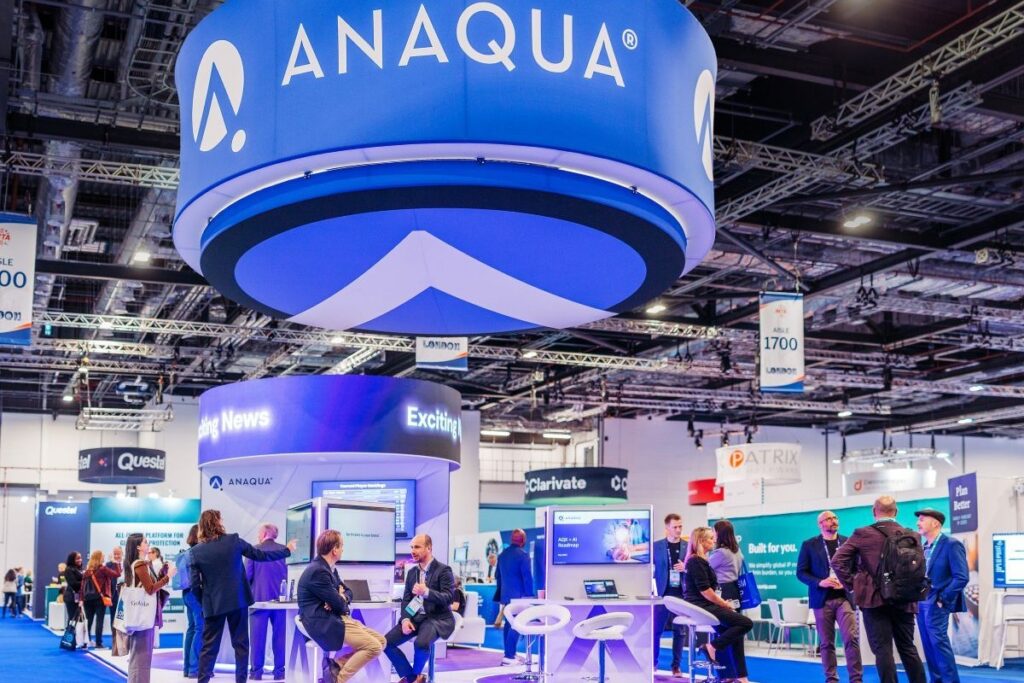
Across Anaqua’s booth at #1831 and our breakfast briefing, three themes ran through almost every conversation we had:
- Practical, Trustworthy AI: moving from promise to practice in IP work
- The Power of the IP Network: collaboration at the scale that IP work now demands
- Brand Protection in a Higher-Risk Environment: where deepfakes, counterfeiting, and shifting legal patchwork are forcing a new playbook.
Here is what we heard, and what we think it means for the year ahead.
1. AI - From Promise to Practice
One theme rose to the top consistently: how AI is reshaping the IP landscape and how it can be applied to make trademark management easier.
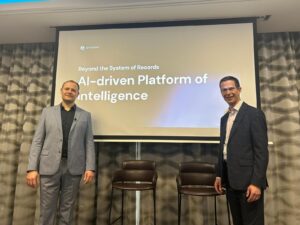
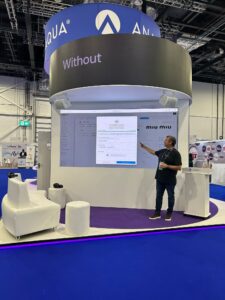
During Anaqua’s breakfast briefing, “Beyond the System of Records: An AI-Driven Platform of Intelligence”, Florian Traub, a partner at Pinsent Masons) and Toni Nijm, Anaqua’s Chief Product Officer, offered practical insights into the future of AI in IP.
Florian Traub shared his perspective on what he believes AI can deliver to law firms today: “Making processes more streamlined, more efficient, while also focusing on what is actually strategically important to clients.”
He expanded on this point, saying, “The expectation is not that we use AI — that expectation is already there. Now, it is about deploying AI in a meaningful and secure way.”Toni Nijm elaborated on what makes that meaningful deployment possible: "AI agents cannot do anything useful without context. That’s where magic happens."
As AI becomes an integral part of IP work, the focus is shifting to the fundamentals. Teams that invest in cleaning data and designing thoughtful workflows are far better positioned to implement AI in practical and scalable ways.
The discussion between Toni Nijm and Florian Traub in the briefing was reinforced by what we heard at the booth. Instead of asking whether to deploy AI, IP teams are now asking which problems AI should solve first, who will own the results, and how the work will be checked. Some of the questions we heard most often at the booth were:
- “Where do we actually start with AI?”
- “How do we get our data ready?”
- “What does professional-in-the-loop look like in our workflow?”
The most useful answers included these tips:
- Start with the problem, not a top-down strategy. Pick a single point of friction: incoming correspondence, classification, deadline tracking - and prove value before scaling.
- Stay firmly in the loop. AI should assist judgment, not replace it. As Anaqua’s outlines in A New Way of Working: Adopting AI into IP processes, validation and oversight of AI should be nonnegotiable.
- Demand transparency and be ready to explain. Trademark professionals will need to see why an agent reached the conclusion it did and overrule it when it is wrong.
The closing takeaway from the briefing captured it best: AI should be in the background with people in the lead.
2. The Power of the IP Network
The second theme focused on how IP teams can collaborate more effectively. As IP work moves across more borders, more vendors, and more handoffs, the risk to IP teams is a fragmented network.
On this topic, there were a few key areas discussed:
- Handoffs are where the time and the risk live. Corporates, law firms, and agents still spend a significant amount of time just trying to reconcile the same information across different systems.
- Increase visibility for firms of all sizes. A connected IP network has the potential to open doors for firms of every size, not just those with large budgets, global offices, or established branding.
- Trusted networks matter in IP. The most useful network is one where every party knows what to expect from every other party, and transparency is high.
This is the vision of the connected IP network - not a feature in a product but a way of operating. Anaqua is built to lead this next phase, with more than 20 years of experience developing IP technology and collaboration as a founding principal. That foundation has been further strengthened by RightHub and Patrix joining Anaqua, expanding our law firm community, European presence, and reach across the IP ecosystem.
“When everyone in the IP ecosystem – companies, law firms, agents, and vendors – can operate in the same connected environment, the whole industry will move faster. That’s the power of the IP network we are building.”
- Jon-James Kirtland, Senior Director, RightHub, Anaqua
3. Brand Protection in a Higher-Risk Environment
The third theme cut to the heart of today’s risk environment: as deepfakes grow more sophisticated, consumers are finding it harder to distinguish legitimate brands from impostors, exposing a widening gap between commercial reality and the limits of trademark law.
Infringement requires use of a sign in a way likely to cause confusion or take unfair advantage. How does a deepfake of a CEO endorsing a competitor’s product, or an AI-generated “reviewer” pushing a counterfeit, fit against those criteria?
Some of these issues can be addressed through passing-off claims; others fall under personality and image rights, defamation, or platform-liability regimes. The practical takeaway from INTA: brand managers will increasingly rely on a hybrid of trademark enforcement plus passing-off, plus personality and right-of-publicity actions, plus notice-and-action takedowns, and where appropriate, criminal referral.
The legislative picture is moving fast and unevenly. Denmark’s move to give individuals copyright-style control over their own likeness, India’s amended IT Rules introducing deepfake disclosure obligations, and a fast-evolving patchwork of US state laws all sit alongside rather than within trademark law itself. A question at INTA was how far this legislation will internationalize, and how brand owners should structure enforcement in the meantime.
What is no longer optional: AI-driven monitoring, automated takedowns, and proactive platform engagement have moved from add-ons to baseline expectations - a point reinforced by Simon Lotze, Attorney, Andersen Partners, and Timmi K. Rysgaard, Product Owner, Brand Protection, Anaqua in our recent webinar: AI in Brand Protection: Moving Faster Without Losing Control.
Two things matter for the year ahead:
- Speed without loss of control. Counterfeiters can spin up hundreds of fake storefronts in minutes; the response needs to be faster, but it cannot be less defensible. AI prioritizes; people decide.
- Governance is a differentiator. Approved tools, zero data retention, audit trails, ISO/IEC 42001 - these are no longer topics to be taken lightly. They are now part of how trademark teams demonstrate they are in control.
On-the-Ground Highlights
A few moments from the week:
Sessions at INTA on M&A, intangible asset valuation, and IP budgeting reinforced a clear shift: trademarks and brand IP are no longer viewed primarily as defensive tools. They are increasingly recognized as core drivers of corporate value—and central to how organizations think about growth, risk, and investment.
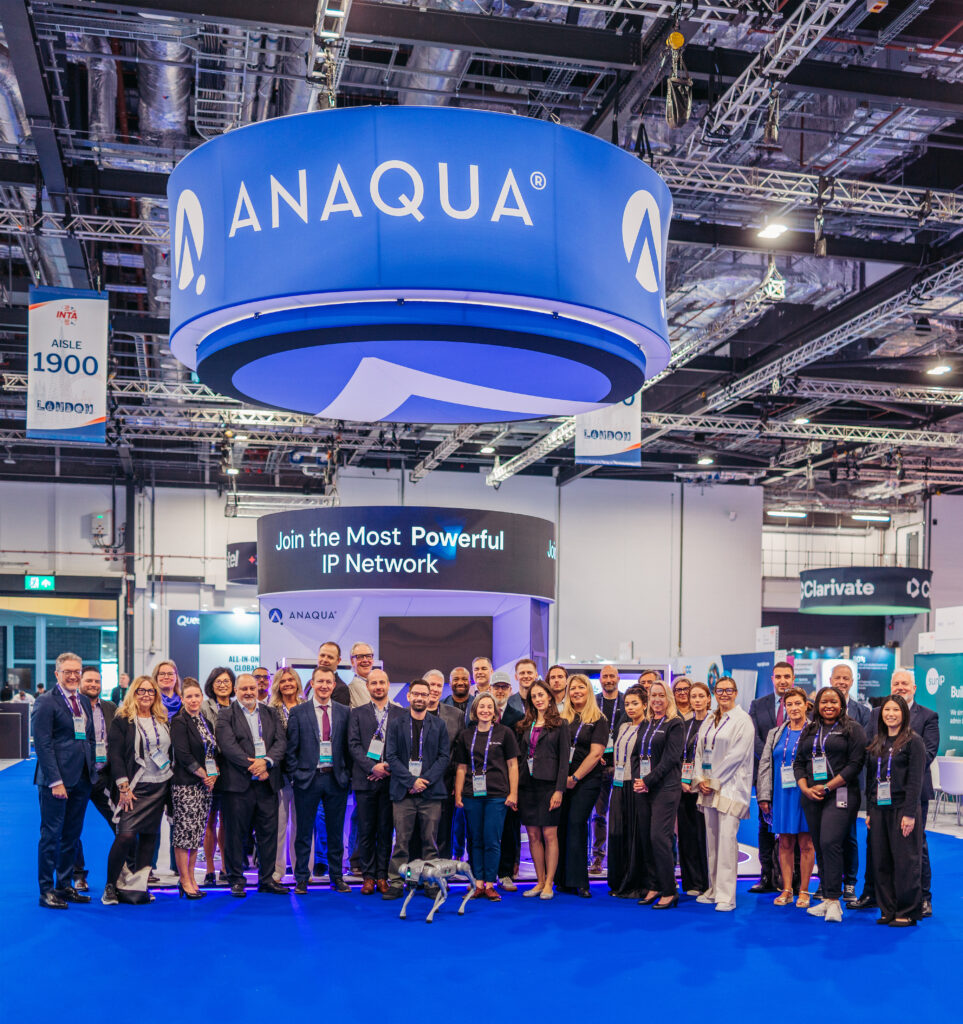
At the Anaqua booth, the energy didn’t let up. There were live presentations and demos, great coffee, and Hubster the robot dog made his rounds. IP trivia with prizes added a lighter note to busy days, and lots of discussions on where the industry is headed.
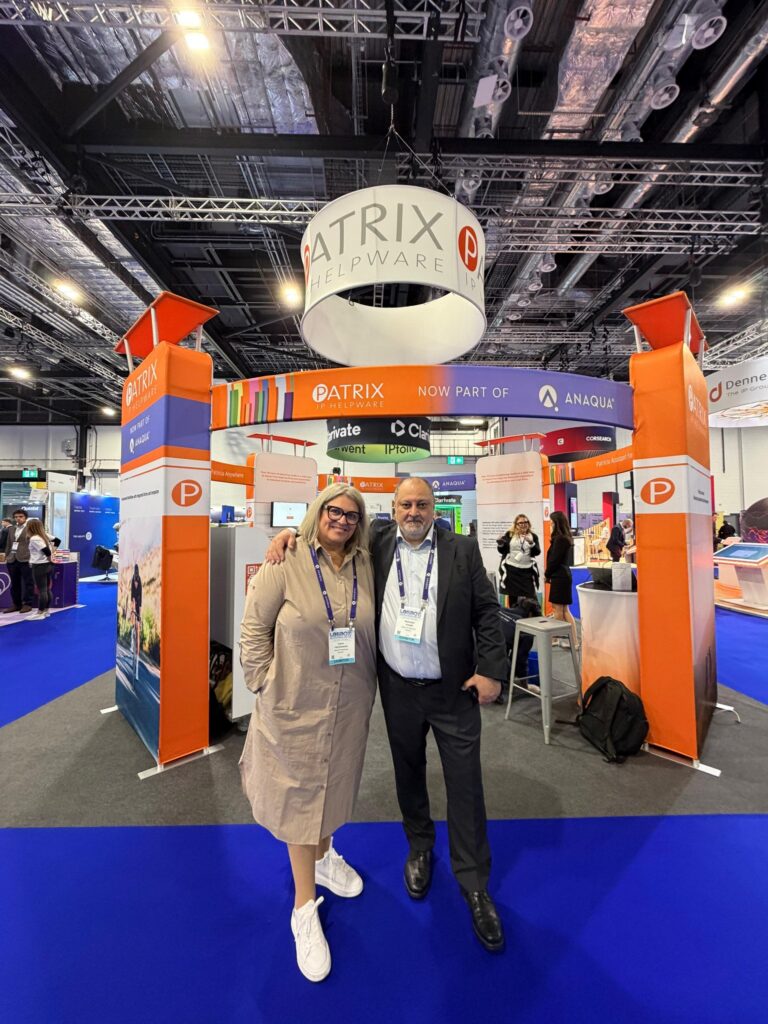
We were also delighted to welcome the Patrix team as part of the Anaqua family for the first time at INTA. Conversations across our combined community made one thing clear: when trusted expertise is connected through a shared network, its value multiplies.
What's Next After INTA
Trademark management is in the middle of a real shift: AI is reshaping IP processes; networks are becoming operationally critical, and brand protection now demands nearly real-time defensibility, stretching teams beyond the limits of legacy IP management tools.
We hope you will collaborate with us on building the future of IP. What we heard IP teams need next include: AI-native IP management platforms that puts professionals in the lead, a connected network that brings corporates, law firms, and agents into closer alignment, and brand protection designed to operate at speed—with governance and audit ready rigor built in.
Thank you to everyone who came by our booth and every conversation in London.
The momentum coming out of INTA is exciting, and the next twelve months will be among the most consequential the industry has had in a long time.
Want to keep the conversation going?
Helpful Resources
- Video: Anaqua Highlights at INTA 2026
- Blog: AI Readiness and IP Operations: Are You Where You Need to Be?
- Blog: The New Realities of Renewals: How Rising Costs, AI and Increased Risk is Impacting IP Portfolios Decisions
- Whitepaper: A New Way of Working: Adopting AI into IP Processes
- Blog: Using AI To Tackle the Rising Threat of Counterfeiting and Brand Abuse in E-Commerce
- Webinar on demand: AI in Brand Protection: Moving Faster Without Losing Control - Anaqua IP Management Software and Services
- Blog: Anaqua Acquires Patrix: What This Means and Why It Matters - Anaqua IP Management Software and Services
Weitere Lektüre