The Future of Patent Litigation
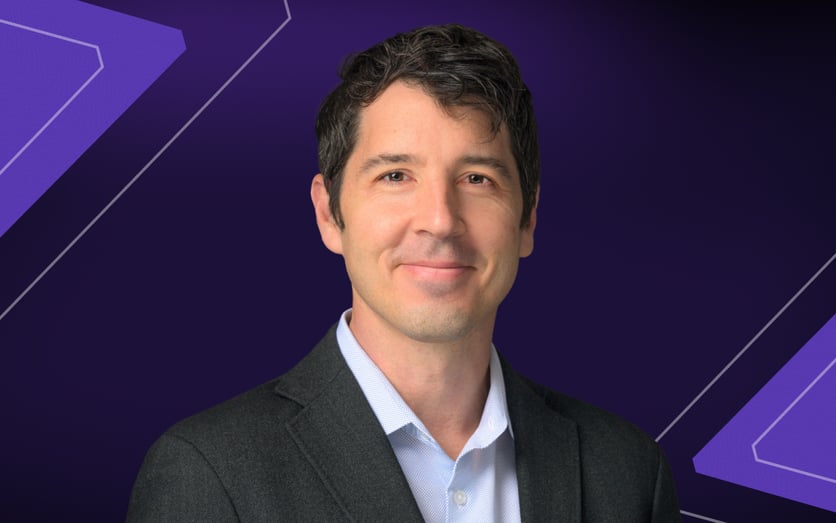
Can you tell us a little about your career journey before joining Unified Patents?
Jonathan: Throughout my life, I’ve had quite a varied career. I grew up in a family of journalists, but went to engineering school to rebel against it, only to realize how much I missed writing, speaking, and being around people. From there, I sidestepped into journalism school and worked as a reporter in South Africa, following in my father’s footsteps. After that, I moved through a variety of jobs, including stand-up comedy.
Eventually, I found my way into the world of patents and became a patent examiner. My time at the U.S. Patent and Trademark Office (USPTO) instilled in me a healthy respect for the difficulty of obtaining high-quality patents, as well as for the people working across the patent system to keep it functioning properly. It also taught me that patents don't exist in isolation. Regardless of your role—examining applications, litigating cases, or managing portfolios—the true measure of success is how well your efforts support broader business goals.
As I progressed in my career, I realized I was most interested in work that combines technology, communication, and problem solving. This realization eventually prompted me to go to law school, which gave me an early front-row seat to the creation of inter partes review proceedings and patent litigation. Since then, I've had the opportunity to work across multiple areas of the IP ecosystem. These experiences ultimately shaped my perspective and led me to Unified Patents.
How did you fall into Unified Patents and what made you stay for so long?
Jonathan: I first got to know Unified Patents while I was in private practice and had the opportunity to work closely with the team. I was drawn to their mission right away. I loved the idea of uniting people to overcome shared challenges in the IP industry and being at the heart of that collaboration and catalyst for change.
What started as a chance to work with a small, ambitious organization turned into an opportunity to grow alongside it. Over the years, I've had the chance to wear many different hats, learn from incredibly talented people, and develop into a leader and teammate.
One of the most rewarding aspects has been observing the evolution of both Unified Patents and the broader IP ecosystem. I've seen my colleagues grow into leadership roles, watched the company expand, and gotten a front-row seat to major changes in the patent landscape. Very few people get that perspective, and it's one of the reasons I've stayed.
In hindsight, growing up with the company has been every bit as valuable as any individual role I've had along the way.
How has the patent landscape changed compared to 15 years ago?
Jonathan: Historically, patent professionals have talked about the balance between patent holders and accused infringers as a pendulum that swings back and forth over time. Recent policies and legal developments have increased litigation risk, leading some commentators to suggest that we're returning to a more litigation-driven era.
While the data bears this out and recent changes have strengthened the hands of patentholders, I'm not convinced that this is the right way—it’s certainly not the only way—to think about it. While some behaviors may seem familiar, the current environment in which patent disputes play out is fundamentally different from anything we've seen before.
The scale of the patent landscape has also changed dramatically. Compared to 15 years ago, the number of existing patents has grown enormously, creating an overwhelming amount of information that cannot be navigated manually. Transactions are up. Disputes are up. Portfolios are bigger. And litigation goes longer and is more complicated and intense than it once was. And AI has a role in helping tackle these massive problems.
AI is increasingly being integrated to sift through vast bodies of IP data, uncovering both valuable enforcement opportunities and potential defensive risks. For companies operating in this environment, understanding their exposure has become much more complex. This is what makes today's patent landscape feel less like a return to the past and more like the beginning of a new era.
What impact does AI have on patent litigation and enforcement?
Jonathan: The biggest reason the landscape feels so different today is AI. Not long ago, analyzing large patent portfolios, identifying potential infringement risks, building claim charts, and assessing enforcement opportunities required a significant investment of time and resources.
Now, AI can perform many of these tasks at a speed that would have seemed impossible just a few years ago. Tasks that once took weeks or months can now—if done right—be completed in a matter of hours. It has made good work better and faster. But it can also generate a lot of poor-quality work that nonetheless has to be addressed: the dreaded “slop bombs.” As a result, the traditional rhythm of patent litigation is changing. The back-and-forth that once unfolded is becoming increasingly compressed as analyses, responses, and litigation strategies are produced faster than ever.
Interestingly, AI is empowering both sides. Defendants use it to identify risks, strengthen invalidity arguments, assess portfolios, and reduce legal costs. Meanwhile, licensors and patent assertion entities are using the same technology to find stronger patents, identify targets, build claims charts, and launch enforcement campaigns more efficiently. AI isn’t rewriting the rules, but it is accelerating everyone's capabilities, good, bad, or otherwise.
Together, these developments are creating a patent ecosystem that is more competitive and data-driven, that is busier than ever before, and that is moving significantly faster than in the past.
Tasks that once required large teams, significant budgets, and months of effort can now be completed much more quickly and efficiently. This means that even organizations with limited resources can operate at a scale that was previously out of reach.
As the IP industry continues to evolve, access to the right technology, data, and expertise is becoming increasingly important.
What excites you most about the opportunities ahead for Unified Patents as part of Anaqua?
What excites me most about the future with Anaqua is the opportunity to remain who we are, only better. I think of the line from Casablanca when Captain Renault describes Rick as "just like any other man, only more so."
That's how I feel about Unified Patents joining forces with Anaqua. We will be us, only more so.
We will continue doing the work we're known for, with access to a larger team, deeper expertise, more data, and greater support. I've already been impressed by the caliber of the Anaqua team and how much I've learned about the software and technology powering the broader IP ecosystem. This has broadened the conversations I can have with prosecutors and industry professionals, opening new possibilities for collaboration. Above all, I'm excited by the scale of what we can achieve together and continuing to help drive positive change across the IP ecosystem.