Three defining themes from Orlando, and what they mean for the future of IP.
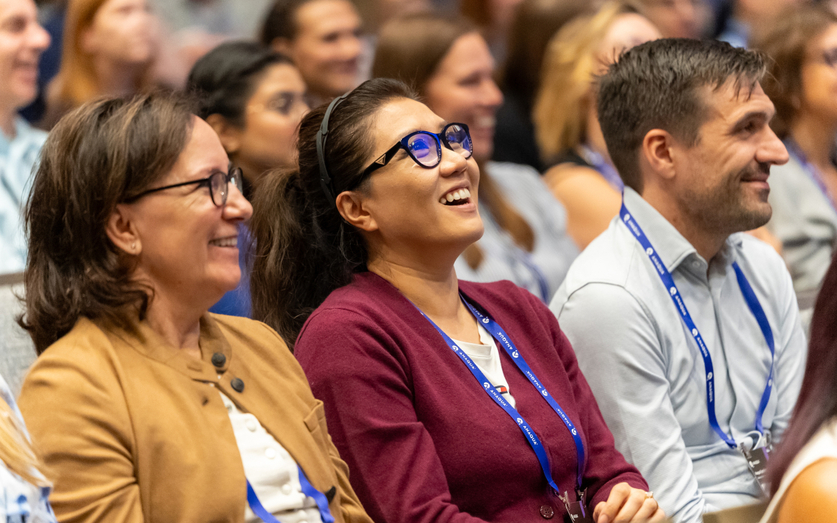
The 2026 Anaqua Experience Conference (AEC) brought together clients, partners, and industry leaders in Orlando for three days of candid conversations, fresh perspectives, and practical insights on the future of IP. Across keynotes, client presentations, roundtables, and hallway discussions, one message came through clearly: the future of IP will be shaped not only by technology, but by the people, partnerships, and decisions that put it to work.
Three themes stood out:
-
AI Is Moving from Hype to Real-World Impact: Organizations are moving beyond experimentation and focusing on where AI can deliver measurable value. As IP becomes increasingly strategic in a rapidly changing global environment, success will depend on connected data, trusted technology, and the ability to turn insight into action.
-
The Human Layer Remains the Competitive Advantage: One of the conference's strongest messages was that AI is not a shortcut to transformation. Technology can accelerate and enhance work, but judgment, expertise, leadership, and change management remain essential. The organizations seeing the greatest value from AI are those investing as much in their people as they are in their technology.
-
Community Accelerates Innovation: Some of the most valuable moments came from clients sharing their experiences, lessons learned, and practical approaches to change. These peer-to-peer conversations demonstrated how a connected community can help organizations move faster, avoid common pitfalls, and turn new ideas into meaningful results.
This year’s theme, Maximizing Today. Transforming Tomorrow., captured the spirit of the event. AEC 2026 showcased how leading IP teams are embracing practical AI, strengthening the human capabilities behind innovation, and learning from one another to prepare for what comes next.
Here is what we heard at AEC 2026 and what it may mean for the work ahead.
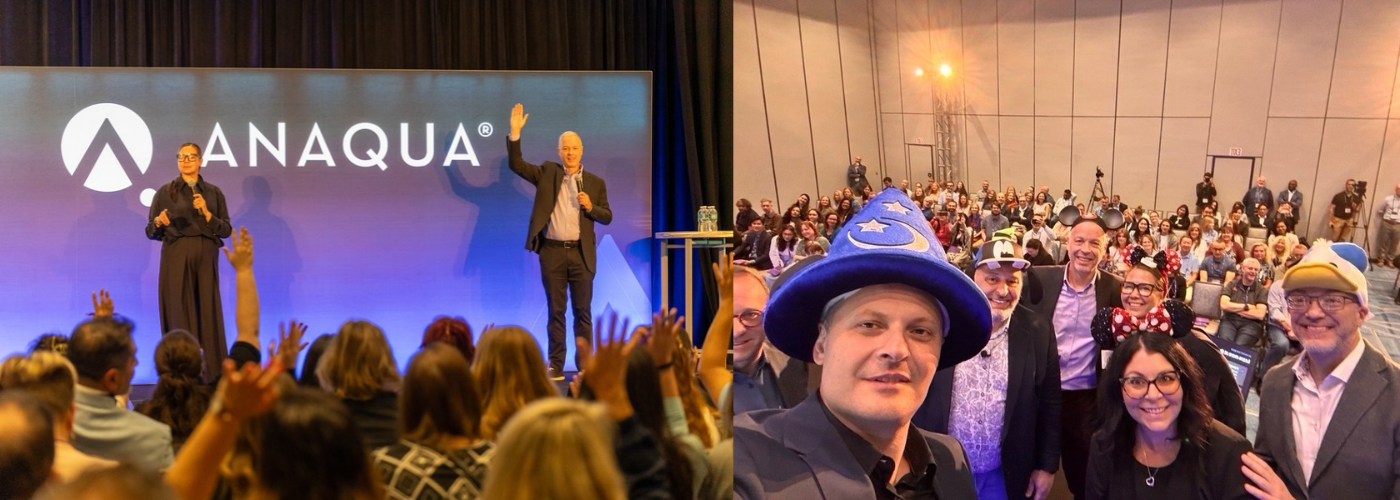
1. Justin Crotty Plenary: Anaqua Business Update & IP Market Observations
Anaqua CEO Justin Crotty welcomed clients to AEC and opened the plenary discussion by addressing the forces that are reshaping intellectual property and innovation management. These forces include the rapid rise of AI, increasing market complexity, and the growing expectation that IP teams will play a more strategic role in achieving business goals.
In reinforcing the conference theme of Maximizing Today. Transforming Tomorrow, Justin emphasized the importance of IP teams continuing to deliver value today while preparing their organizations for what comes next.
Some of the insights and themes he shared were drawn from approximately 100 client meetings over the past 18 months across the globe.
Key Takeaways
- Anaqua continues to expand its scale and capabilities. The past year has been marked by continued growth across our business, reflecting the trust our clients place in Anaqua and our ongoing investment in innovation. We have expanded our portfolio of AI-powered capabilities and completed three acquisitions: RightHub, Patrix, and Unified Patents.
- The IP market is changing, but growth opportunities remain. Trademark and design filings at the EUIPO are growing, while EPO patent filings grew just 1.4% and USPTO filings fell 9% after seven years of growth. Renewal volumes have slowed as the Unitary Patent gains traction, official fees rise, the COVID-era filing gap reaches renewal stage, and AI tools make portfolio pruning easier. Anaqua will handle around 1.4 million renewal transactions this year. His outlook was that moderating trends could support a return to growth.
- IP teams are being asked to do more with less. 69% of IP teams say their workload has grown while headcount stayed flat or fell, and 79% of CFOs are targeting operating cost reductions, with legal and compliance now their third most likely target. US district court patent filings rose 20% last year and security threats to law firms are rising, both adding cost and risk.
- AI is affecting both IP work and expectations of IP technology. Justin Crotty emphasized that AI should be applied to address real business problems:
- Anaqua is evolving to meet the needs of the IP market. He described new product and engineering organizations and a revamped product vision and roadmap.
- Anaqua is positioning itself as an end-to-end IP partner. The strategy extends beyond providing software to supporting clients across their IP journeys through technology, services, expertise, and closer collaboration. Unified Patents, for example, adds support for defending against non-practicing entities and managing standard essential patents, an area where rising litigation costs are taking a growing share of IP budgets.
“We don’t do AI for the sake of it,” he said. While 70% of legal professionals now use AI, 75% of them are still in the earliest stages, meaning most of the value is yet to come. The focus is on producing practical outcomes while ensuring that people are involved in important decisions.
That commitment to partnership carried throughout the conference, with client speakers sharing how they are addressing many of the same challenges and opportunities in their own organizations.
“Our strategy is to be your end-to-end partner on your IP journey.” – Justin Crotty, CEO
2. Product Roadmap, Direction & Vision: Building Practical AI into IP Workflows
Chief Product Officer Toni Nijm brought the product roadmap to life for clients by showing how Anaqua is applying AI to specific IP workflows. Toni outlined what has been delivered this year and what’s ahead for Anaqua’s IP management platform across invention management, data streaming, and AI docketing.
“We have a new product organization and new engineering organization. We virtually revamped the whole product vision and roadmap to respond to what’s happening in the marketplace.”
– Toni Nijm, Chief Product Officer
Toni Nijm started with a show of hands. Who would let AI draft a patent or trademark application? Many hands went up. Docketing? More hands. When he asked who would let AI abandon a patent, not a single hand went up. “That’s where the line goes,” he said.
He asked IP teams to sort their processes into three tiers: work agents can complete autonomously, work a person would review before it is carried out, and a hard gate where nothing is automated. Where each process sits depends on how an organization weighs risk, especially for decisions that can’t be undone.
Key Takeaways
- The Anaqua roadmap is shifting from systems of record toward systems of intelligence and action. It connects trusted portfolio data with AI, workflows, and tools that can support decisions and take defined actions. AI has moved into the platform quickly: AQX 11.2 had no AI features, while 60% to 70% of AQX 11.4 used AI.
- Invention management is being redesigned around the inventor experience. Difficult submission processes lead to missed inventions and weaker disclosures, so Anaqua is rebuilding submissions, dashboards, and AI capabilities from the ground up. Prior art search, trade secret support, and search across past inventions will follow.
- An AI model alone is not a complete product. It needs a harness that supplies portfolio context, permissions, workflow tools, guardrails, and measurable evaluation. Toni compared it to a doctor: the model is the trained brain, but it can’t act without tools, the patient’s history, and the right context.
- Human judgment remains essential. AI supports and automates defined workflows, while people keep oversight and accountability for consequential decisions. As Toni put it, agents carry no liability: “The liability sits with us.”
Unveiling Anaqua’s AI Docketing
Toni also unveiled AI docketing, Anaqua’s first agentic AI harness. Rather than relying on a single AI interaction, it combines multiple models, tools, and deterministic workflows to interpret incoming correspondence. Each email raises its own questions: does it relate to one record or several, and which country, event, and custom fields apply?
“This is not a simple problem to crack… This is an innovation stack, not a singular problem.”
- Toni Nijm
Nicole Davis, Associate Director, IP Operations, spent eight years as an Anaqua client before joining the company. She demonstrated how Anaqua’s new approach for AI docketing will transform the way docketing teams work in the future.
Emails and communications from the USPTO, EPO, and EUIPO arrive in one inbox, and AI extracts the relevant information, so teams spend less time reviewing emails and more time making decisions. “The future is not hiring more people to read more emails. It’s letting AI do all the work for you so your team can make the decisions that matter.” – Nicole Davis
Rules route work to the right person automatically, sensitive items can be sent for review before anything is docketed, and dashboards show what has arrived, what has been docketed, and what may have been missed. Work that previously took five to eight minutes can now be completed in less than a minute.
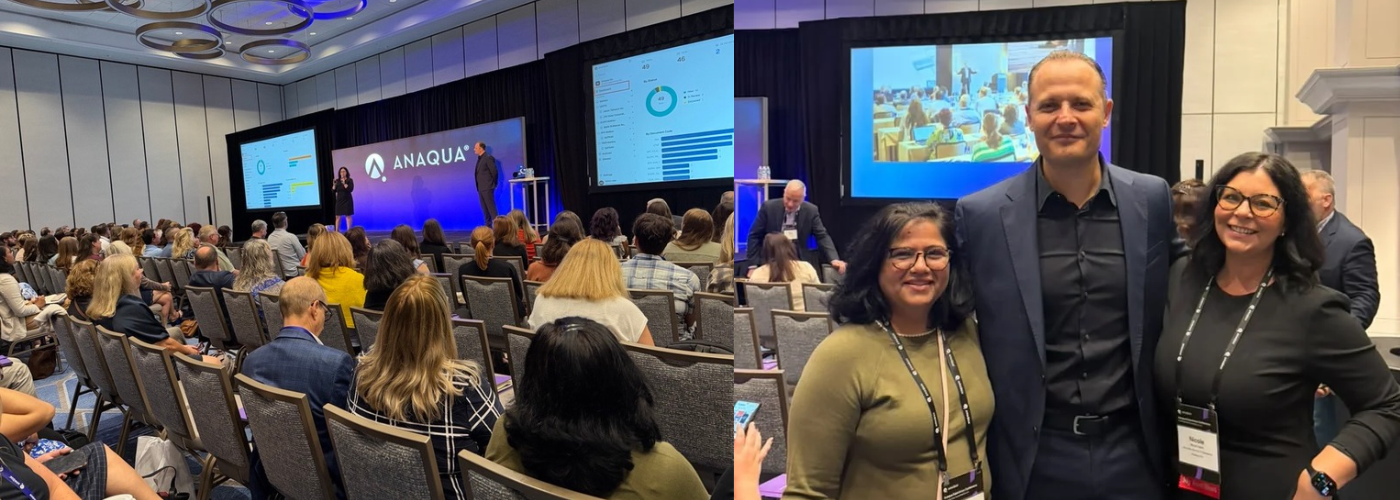
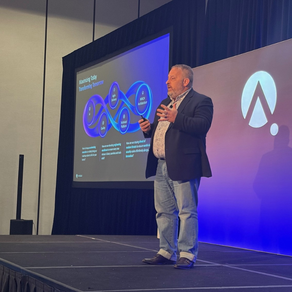
While Toni and Nicole discussed Anaqua’s new AI capabilities and what’s ahead, Chief Technology Officer Eldon
Richards focused on the engineering foundation required to support that future. His presentation highlighted how Anaqua is evolving its software delivery practices to improve quality, resilience, and security while accelerating innovation. As AI becomes a larger part of the product roadmap, Eldon emphasized the importance of disciplined engineering processes that enable teams to move faster without compromising reliability. The message was clear: meaningful innovation depends not only on new technology, but on the engineering excellence required to deliver it consistently, securely, and at scale.
3. AI Is Moving from Possibility to Practice
The keynote presentations approached AI from different perspectives but shared a clear message: technology alone does not create meaningful change.
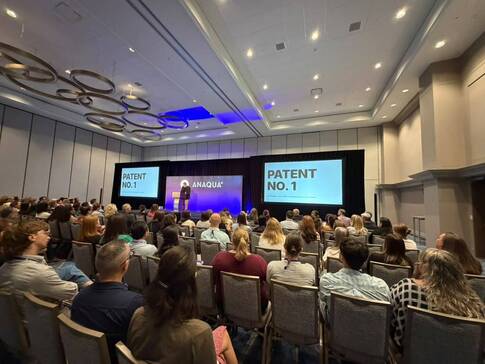
Jason Snyder, AI strategist and Co-founder of SuperTruth, in his presentation, “The Human Layer: The Future of Innovation in the Age of AI”, focused on the role of human judgment and accountability. He opened with an experiment. He asked three AI models to write his talk and had all 300-plus claims checked. The cheapest model invented a person who never existed. The best model invented no sources, yet it changed a judge’s words in Mata v. Avianca, the case in which lawyers filed a brief citing cases ChatGPT had made up. “It took a real judge, a real case, a real sentence, and it moved it an inch,” he said. The only way to catch it was to read the opinion.
He then drew on 600 years of IP history. England’s Statute of Monopolies of 1624 allowed patents only for “the true and first inventor,” and Jason pointed out that true and first are the two questions a generative model can’t answer about its own output. In 1836, the US Patent Office burned down with a fire engine on site, but no one left to run it, after a request for $500 to maintain it was refused. It took 12 years of copying by hand to recover fewer than a third of the lost patents.
For Jason, the risk for IP teams is a slow loss of accuracy in the record: a prior art reference that reads well but doesn’t exist, or a docket date pulled from the wrong email. He cited a public database of court decisions involving AI-fabricated citations that had reached 2,086 cases the weekend before his talk.
“The biggest risk is not the machine; it’s the missing human.” - Jason Snyder, AI strategist and Co-founder of SuperTruth.
He was clear that he wasn’t telling anyone to refuse the tools. His advice was to use them every day and keep a list of every error they make and who caught it. He closed with three principles:
- Friction is not the bug. The people doing the work should decide which checks are worth keeping and defend them.
- Provenance must survive contact with the tool. Anything AI produces should answer one question before it enters the record: where did this come from?
- Sign your work. Put your name to the claim, the date, or the inventor you checked.
“The human layer is not the system’s residue. It is the system.” - Jason Snyder
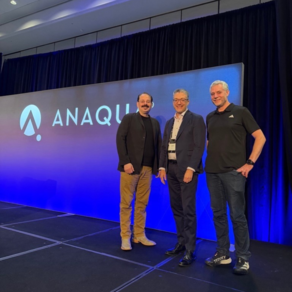
Christof Wolpert, VP Global Legal Product Creation at adidas, focused on the leadership required to move teams from skepticism to participation in his session, “From Skeptics to Champions: Leading IP Teams Through AI Transformation”. He described AI as a capacity multiplier while emphasizing that successful transformation depends on the wider team, not only managers. He called it “change management 2.0”: some people resist and wait to copy other companies, others accept whatever the AI produces, and the goal is to bring both groups to the middle, where people use the tools critically.
“AI has the potential to transform the IP function… but it’s not a magic wand.” - Christof Wolpert, VP Global Legal Product Creation
Christof Wolpert was open about the risks. His team asked AI the same legal question two ways and got two different answers. His practical advice: start with one prompt if you’re sceptical, share what works and what doesn’t, route new vendor pitches through one person, and ask your law firms which AI tools they use so they don’t outskill your team.
“It unleashes time to focus on what really matters.” - Christof Wolpert
What this means: Practical AI adoption requires appropriate human oversight and leadership that helps people participate in the change. The person who checks the output owns the record.
4. Clients Learning from One Another Strengthens the Community
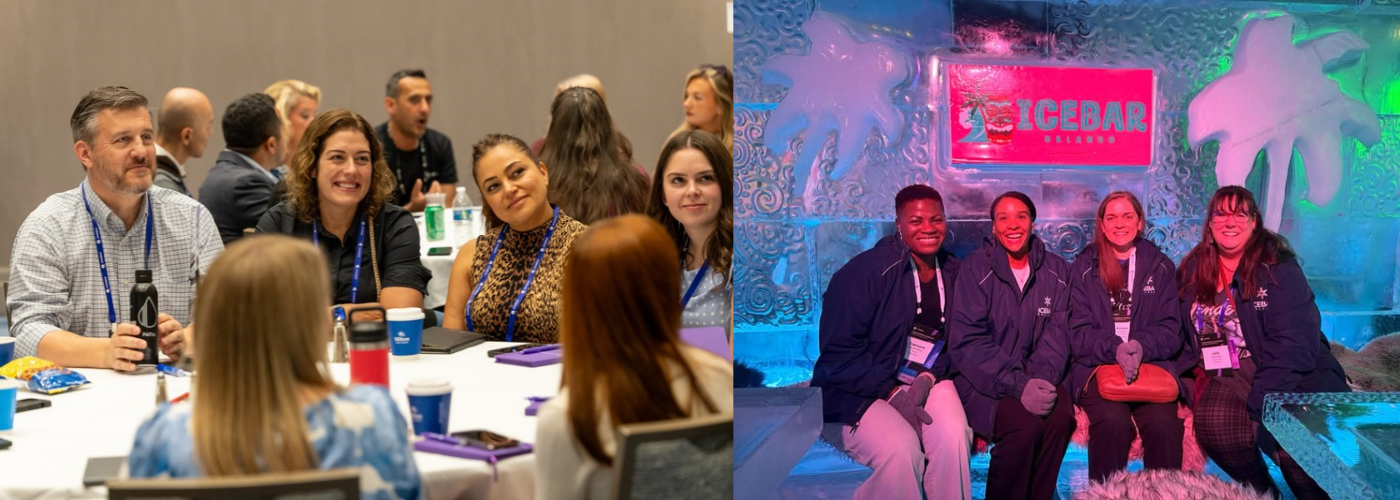
What makes AEC special is the chance for clients to learn directly from one another. Throughout the week, clients shared how they are approaching some of today’s biggest IP challenges, from AI in IP operations and workflow modernization to brand protection, strategy, and collaboration.
Speakers from Amazon, adidas, ITT, Mondelez International, Pinsent Masons, and Meiji shared their experiences, practical lessons, and perspectives on what is working, what remains difficult, and what they are learning along the way.
That spirit of sharing extended well beyond the formal sessions. It carried into the Executive Track, roundtables, hallway conversations, and coffee breaks, where attendees exchanged ideas, asked questions, and explored how lessons from one organization might apply to another. As Paul reflected in his closing remarks, one of the most important aspects of coming together is “sharing that bond.”
What Comes Next
AEC 2026 reflected an IP community focused on practical progress. AI is entering real workflows, leaders are considering how to guide adoption, and organizations are looking for ways to connect technology with the people and processes that make it useful.
The next step is to carry those conversations back into the organization: identify a meaningful problem, learn from peers, establish the right structure, and keep people at the center of change. That includes deciding where the line sits between the work AI can do on its own and the decisions that stay with people.
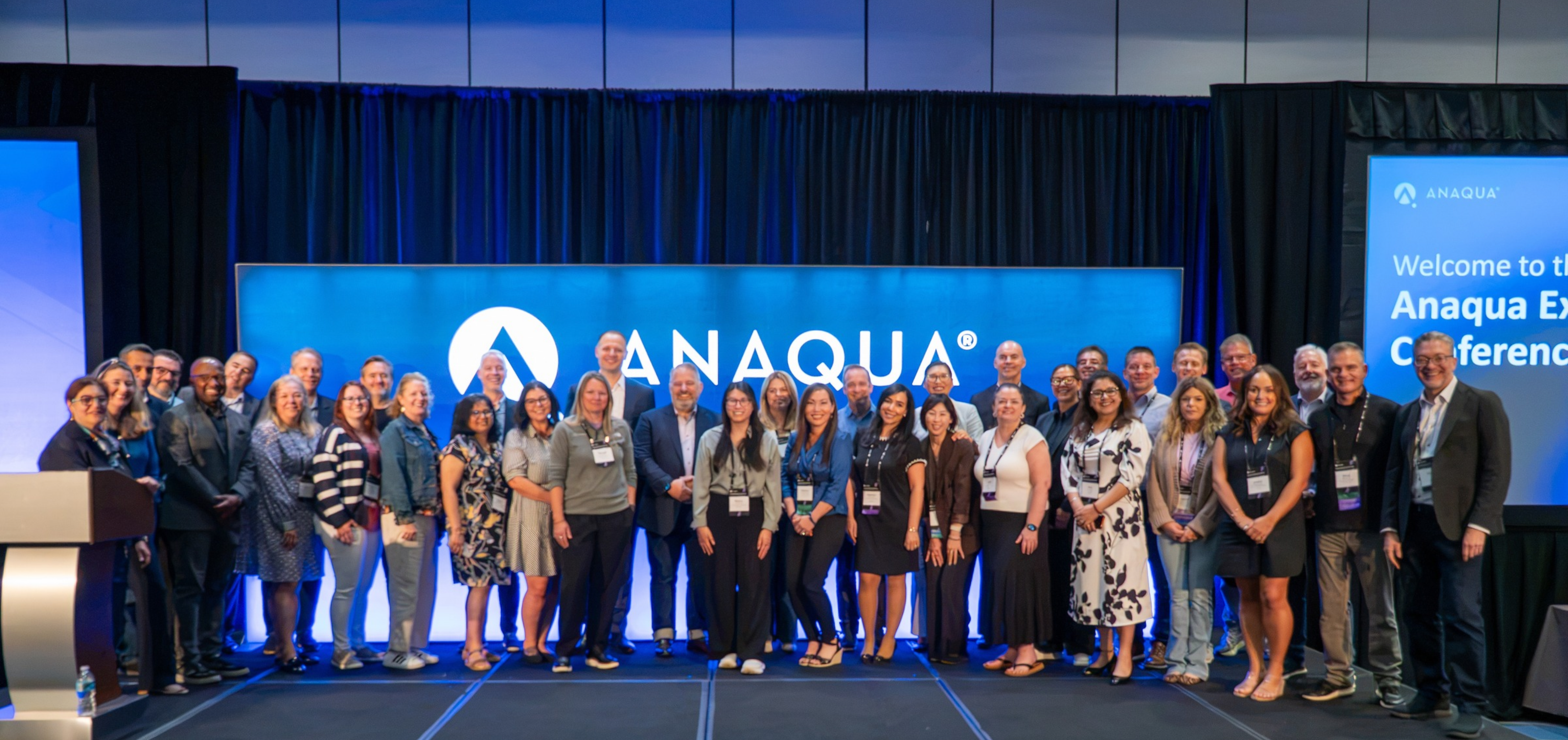
Thank you to every client, speaker, sponsor, partner, and member of the Anaqua team who contributed to AEC 2026. We look forward to the 2027 Anaqua Experience Conference.
Interested to learn more?
Anaqua CIO Erik Bailey recently shared his own reflections on how the conference and the Anaqua community has grown over nearly 20 years here.
Additional reading: